| A conceptual framework for understanding, assessing, and mitigating ecological effects of forest roads |
Nova Scotia |
Dalhousie University |
 |
| Highway 10 Connectivity Plan |
Quebec |
Appalachian Corridor |
|
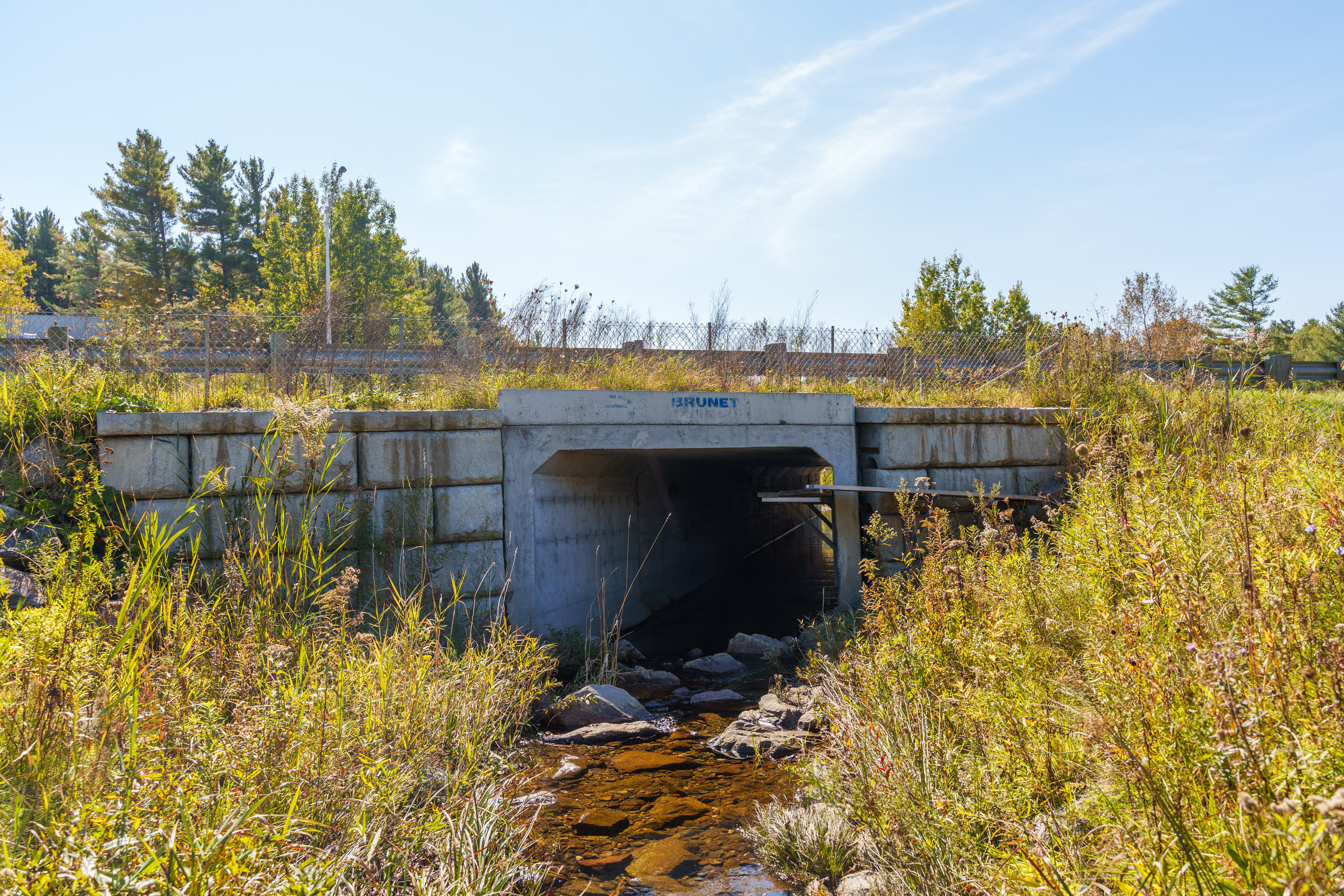
| Promising results for the first wildlife crossing built under Highway 10 at Exit 115 in the Estrie region |
Quebec |
Appalachian Corridor |
|
| Promising results for the first wildlife crossing built under Highway 10 at Exit 115 in the Estrie region |
Quebec |
Appalachian Corridor |
|
| Monitoring the Use of Wildlife Crossings Under Route 245 Near Peasley Pond |
Quebec |
Appalachian Corridor |
|
| Land conversion and lack of protection significantly reduce suitable wolf habitat amount and functional connectivity in the Adirondack‑to‑Laurentians (A2L) transboundary wildlife linkage |
Quebec |
Concordia University |
|
| Impacts of anthropogenic land transformation on species‑specific habitat amount, fragmentation, and connectivity in the Adirondack-to‑Laurentians (A2L) transboundary wildlife linkage between 2000 and 2015: Implications for conservation and ecological restoration |
Quebec |
Concordia University |
|
| Connectivité écologique Mauricie : Sud-Ouest |
Quebec |
Conseil régional de l'environnement Mauricie |
|
| Tomorrow's Forest - Green Infrastructure |
Quebec |
Earth Day Canada |
|
| Vision de conservation du territoire du mont Kaaikop |
Quebec |
Institut des territoires |
|
| Consultation, conservation et dotation : l'initiative de l'Institut des territoires |
Quebec |
Institut des territoires |
|
| Monitoring changes in landscape structure in the Adirondack‑to‑Laurentians (A2L) transboundary wildlife linkage between 1992 and 2018: Identifying priority areas for conservation and restoration. |
Quebec |
Concordia University |
|
| Plan de connectivité des tourbières Red Mill et Lac-à-la-Tortue |
Quebec |
Conseil régional de l'environnement Mauricie |
|
| Development of a methodology for the modeling and validation of wildlife corridors in the context of road projects |
Quebec |
Université du Québec à Rimouski |
|
| Identification des Écosystèmes prioritaires, basses-terres du Saint-Laurent, sud de Lanaudière |
Quebec |
Ministère de l’Environnement, de la Lutte contre les changements climatiques, de la Faune et des Parcs |
|
| Identification des Écosystèmes prioritaires, basses-terres du Saint-Laurent, sud de Lanaudière |
Quebec |
Ministère de l’Environnement, de la Lutte contre les changements climatiques, de la Faune et des Parcs |
|
| Identification des Écosystèmes prioritaires, basses-terres du Saint-Laurent, sud de Lanaudière |
Quebec |
Ministère de l’Environnement, de la Lutte contre les changements climatiques, de la Faune et des Parcs |
|
| Identification des Écosystèmes prioritaires, basses-terres du Saint-Laurent, sud de Lanaudière |
Quebec |
Ministère de l’Environnement, de la Lutte contre les changements climatiques, de la Faune et des Parcs |
|
| Identification des Écosystèmes prioritaires, basses-terres du Saint-Laurent, sud de Lanaudière |
Quebec |
Ministère de l’Environnement, de la Lutte contre les changements climatiques, de la Faune et des Parcs |
|
| Une communauté engagée pour la qualité de l'eau et la biodiversité des ruisseaux Lavoie, Hébert et Dicaire (CEBR) |
Quebec |
Organisme de bassins versants des rivières Rouge, Petite-Nation et Saumon (OBV RPNS) |
|